Case Study: Ignition Alarm Monitoring System
Designing and implementing a production-representative SCADA alarm system using Ignition Perspective, tag-based alarm configuration, operator acknowledgment workflows, and alarm notification pipelines
Project Overview
This project implements a real-time alarm monitoring system within the Ignition SCADA platform, simulating the alarm management requirements of a live industrial process environment. A memory tag represents a dynamic tank level variable, with alarms configured to trigger automatically when the process value breaches defined engineering thresholds.
The system encompasses the full alarm management stack — visualization, operator interaction, state lifecycle tracking, and downstream notification logic — faithfully replicating how production SCADA systems handle critical process conditions and enforce operator accountability.
Problem
In industrial process environments, timely and reliable alarm notification is a safety-critical requirement. When process variables exceed safe operating limits, operators must receive unambiguous, prioritized alerts. The system must enforce a structured acknowledgment workflow to ensure that no alarm is silently dismissed, providing an auditable record of operator response and system state transitions throughout the alarm lifecycle.
Solution
- Memory Tag: Tank_Level_Test — simulating a live analog process variable
- High-level alarm configured to trigger above a defined engineering setpoint
- Alarm priority classification and full state lifecycle tracking (Active / Acknowledged / Cleared)
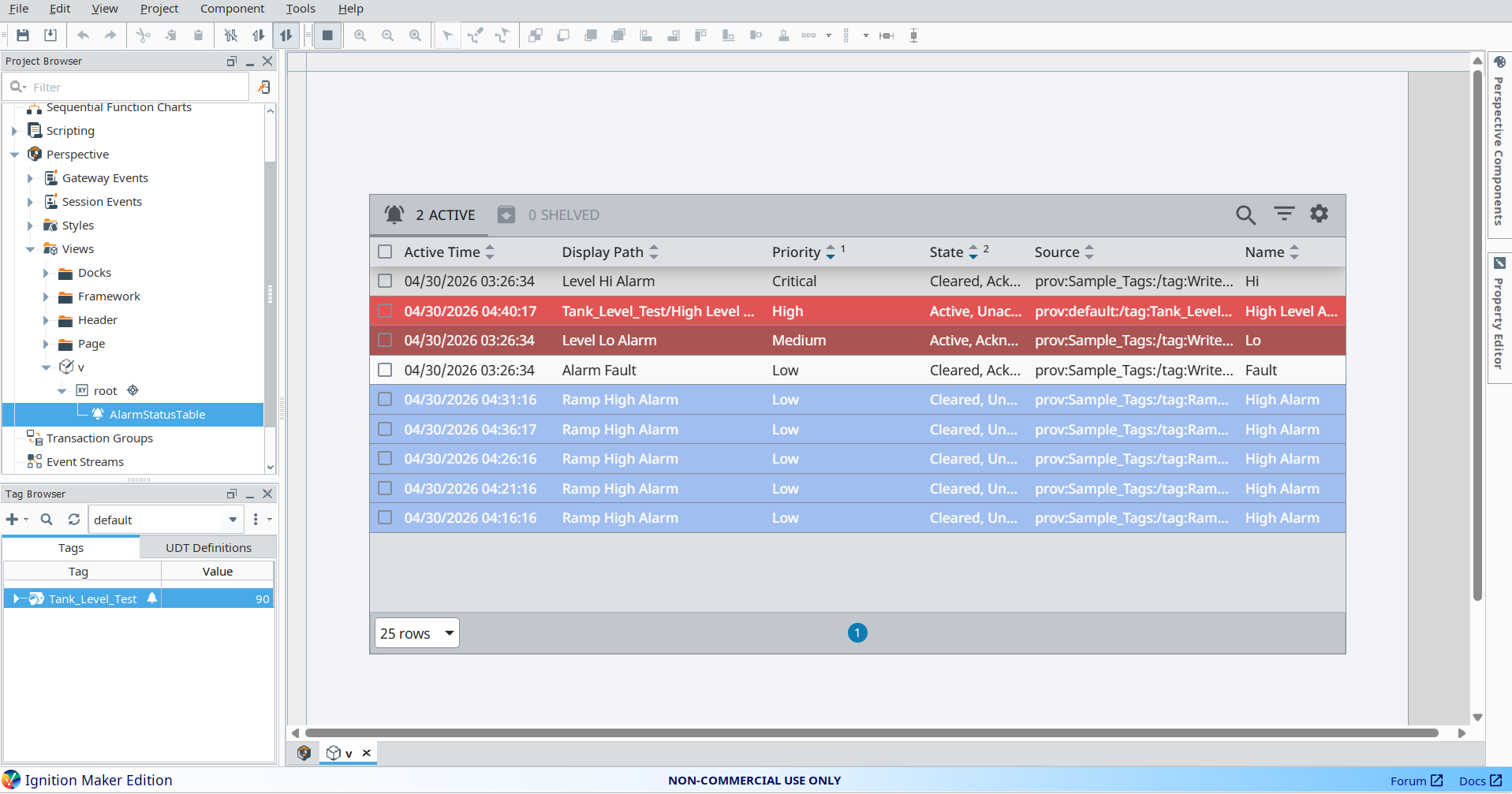
- Perspective Alarm Status Table for real-time operator visibility
- Manual acknowledgment workflow enforcing structured operator response
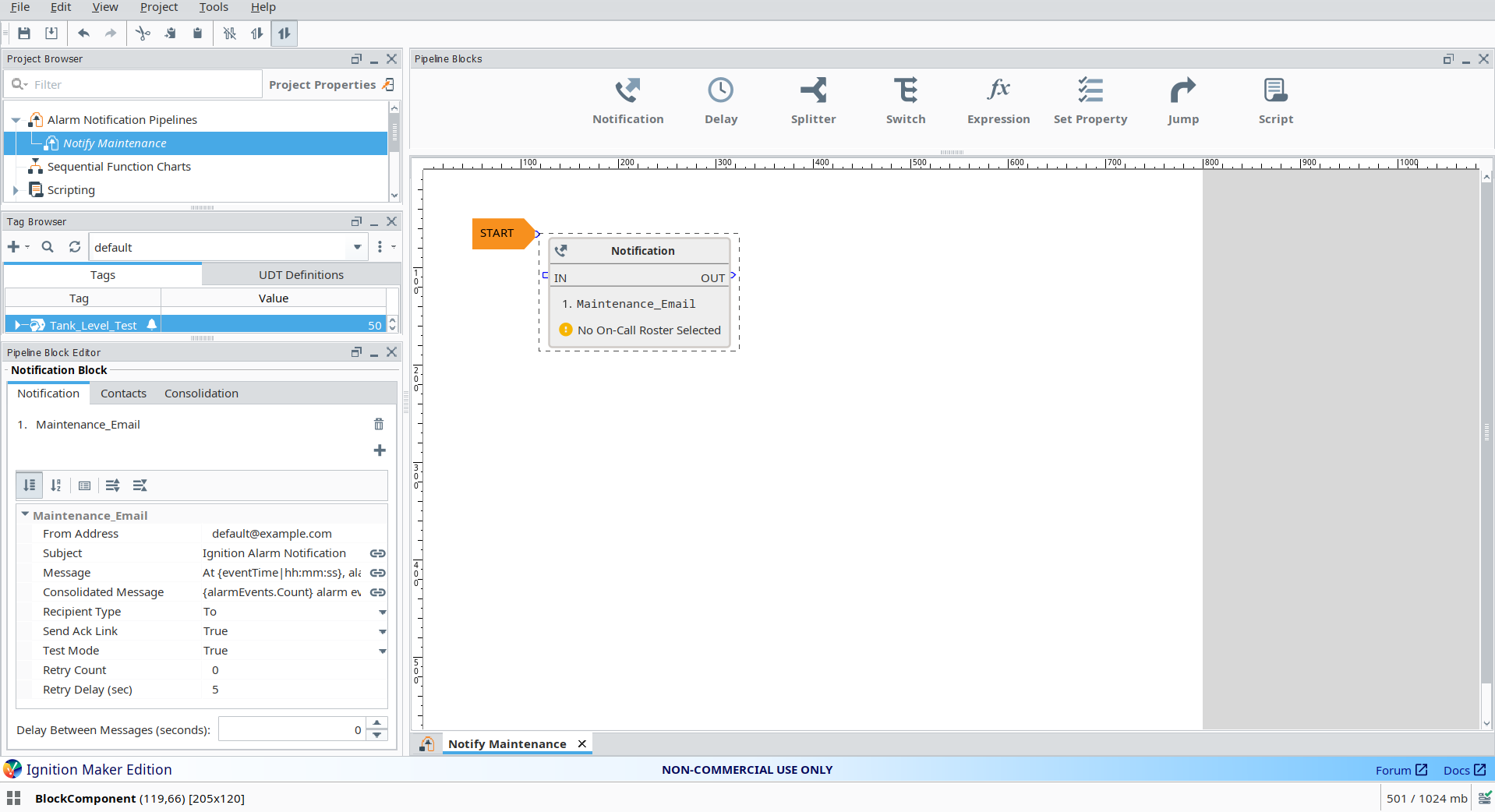
- Alarm Notification Pipeline for automated downstream alerting
The system manages the complete alarm lifecycle — from initial activation through operator acknowledgment to condition clearance — providing a production-representative operator workflow with full state visibility at every stage.
Engineering Decisions
- Employed memory tags to simulate analog process behavior, enabling full system development and testing without dependency on physical PLC hardware
- Configured manual acknowledgment mode to replicate real-world operator accountability requirements, ensuring alarms cannot clear without explicit operator interaction
- Assigned high-priority classification to the alarm to reflect the criticality of an upper-bound process breach, consistent with industrial alarm rationalisation standards
Alarm Configuration
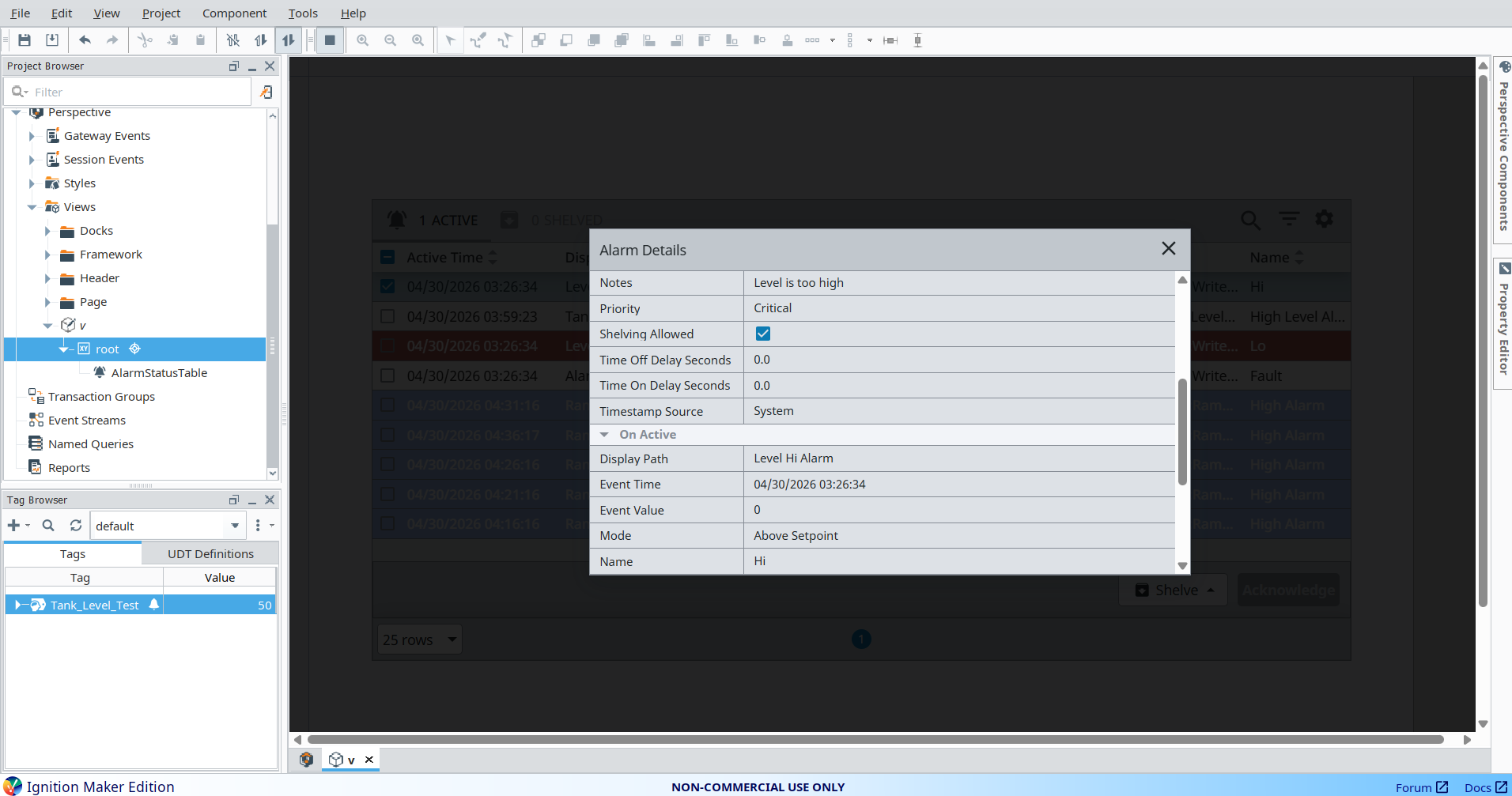
- Setpoint: 80 (engineering units)
- Mode: Above Setpoint — alarm activates on threshold breach
- Priority: High — surfaces immediately in the operator alarm table
- Acknowledgment: Manual — requires explicit operator confirmation before clearance
Once the tank level exceeds the configured setpoint, the alarm transitions to an active state and remains latched until two conditions are satisfied: the process value returns within the normal operating range, and the operator has explicitly acknowledged the event. This two-condition clearance pattern is consistent with ISA-18.2 alarm management principles.
Project Screenshots
Testing & Debugging
- Simulated process variable changes by scripting tag value writes to drive the tank level across the alarm threshold
- Verified alarm activation, correct priority assignment, and Perspective table display on threshold breach
- Validated the manual acknowledgment workflow end-to-end within the Perspective operator interface
- Observed and documented all alarm state transitions — Active, Acknowledged, and Cleared — to confirm correct lifecycle behavior
- Diagnosed and resolved tag write permission issues surfaced during simulation testing
Challenges Faced
The primary issue encountered was a Bad_GatewayCommOff quality code on the target tag, which blocked all write operations and prevented alarm simulation from proceeding. Root cause analysis identified insufficient tag write permissions in the Designer security model; the issue was resolved by adjusting the tag's security settings to permit write access from the development context.
A secondary challenge involved understanding why active alarms could not be acknowledged through the Perspective interface. This required a deeper investigation into Ignition's alarm state machine — specifically, the distinction between an alarm that is active and unacknowledged, active and acknowledged, and cleared but pending acknowledgment. Correctly mapping these states was essential to understanding the expected operator interaction model.
A significant architectural insight gained during this project was the functional separation between Ignition's Gateway and Designer environments. System-level configuration — including alarm pipelines, user role management, and notification profile setup — is administered through the browser-based Gateway web interface. Visualization logic, component binding, and scripting are managed within the Designer application. Recognizing and internalizing this two-layer architecture was foundational to efficiently navigating the platform and diagnosing configuration issues.
Key Learning Outcomes
- Ignition Perspective component architecture and session-based UI model
- Tag-based alarm configuration within the Ignition tag provider system
- Alarm lifecycle management: Active, Acknowledged, and Cleared state transitions
- Alarm pipeline design for automated notification routing and escalation
- SCADA operator workflow design aligned with industrial alarm management best practices
Tools Used
- Ignition 8.1 (Maker Edition)
- Perspective Module
- Alarm Notification Pipelines
- Memory Tags